
As WHOIS Transitions to RDAP, How Do We Avoid the Same Mistakes?
In 1905, philosopher George Santayana famously noted, “Those who cannot remember the past are condemned to repeat it.” When past attempts to resolve a challenge have failed, it makes sense to consider different approaches even if they seem controversial or otherwise at odds with maintaining the status quo. Such is the case with the opportunity to make real progress in addressing the many functional issues associated with WHOIS. We need to think differently.

How DANE Strengthens Security for TLS, S/MIME and Other Applications
The Domain Name System (DNS) offers ways to significantly strengthen the security of Internet applications via a new protocol called the DNS-based Authentication of Named Entities (DANE). One problem it helps to solve is how to easily find keys for end users and systems in a secure and scalable manner. It can also help to address well-known vulnerabilities in the public Certification Authority (CA) model. Applications today need to trust a large number of global CAs. There are no scoping or naming constraints for these CAs – each one can issue certificates for any server or client on the Internet, so the weakest CA can compromise the security of the whole system. As described later in this article, DANE can address this vulnerability.

3 Tips for Improving Your Website DNS Performance During the Holidays
With the biggest shopping season just around the corner, it is more important than ever that your website is available and consumers can find it. As companies add eye-catching images, social share buttons and attractive promotions to grab consumers’ attention, they may also inadvertently be slowing down their website.
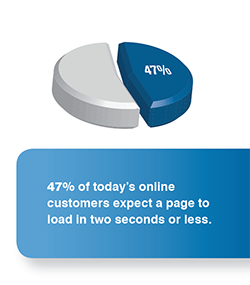
For consumers who are increasingly impatient and expect a website to load within two seconds or less, the majority will quickly abandon a slow-loading page along with their shopping cart, resulting in lost revenue. With so many potential problems to slow down your site, the domain name system (DNS) doesn’t have to be one of them.
What is DNS?
DNS is the Internet’s equivalent to a phone book. It maintains a directory of domain names and translates them to their respective Internet Protocol (IP) addresses, enabling the end user to access a desired Web page. Any disruption to the DNS during the holiday season can be disastrous for retailers.
“DNS is the Achilles’ heel of the Web, often forgotten, and its impact on website performance is ignored until it breaks down,” explains Mehdi Daoudi, CEO of Web performance monitoring firm Catchpoint. However, it doesn’t have to be.

Verisign DDoS Trends Report: Verisign Mitigates More Attack Activity in Q3 2015 Than Any Other Quarter During Last Two Years
As part of our efforts to support National Cyber Security Awareness Month by sharing the latest cybersecurity research, Verisign just released our Q3 2015 DDoS Trends Report, which represents a unique view into attack trends unfolding online for the previous quarter, including attack statistics and behavioral trends, derived from distributed denial of service (DDoS) attack mitigations enacted on behalf of, and in cooperation with, customers of Verisign DDoS Protection Services and the security research of Verisign iDefense Security Intelligence Services.
The most notable observation is DDoS attack activity increased in Q3 to the highest it has been in any quarter over the last two years. Quarter over quarter, Verisign mitigated 53 percent more attacks in the third quarter this year than in the preceding quarter.

Protect Your Privacy: Opt Out of Public DNS Data Collection
This blog was initially published on Oct. 23, 2015. On Nov. 2, 2020, Neustar announced the acquisition of Verisign’s Public DNS. Further information can be found here.
We’ve all seen the check boxes. They’re hidden at the bottom of webpages. You can’t ignore them, but sometimes you forget they are there. They offer to send you deals and coupons. Some even offer to connect you with their partners for similar benefits. Do you check the box?
In these situations you are given a choice of how you want your personal information used. These sites provide the option to trade some of your personal information for a future benefit. If you decide to opt in, your personal information will be transferred, traded or sold to others, and in exchange you will receive something in return, i.e., 10 percent off your next purchase, advance notice of upcoming events, a free gift, etc. If you opt out, you will receive nothing. Regardless of the return, you were given a choice; opt in and receive a benefit for the use of your personal information, or opt out and be content that your personal information won’t be sold.

Defense in Depth — Protect Your Organization at the DNS Layer with DNS Firewall
Security professionals agree that a strong security posture is one that is implemented in a layered approach. This layered approach is also referred to as “defense-in-depth.” A defense-in-depth strategy consists of applying security mechanisms across your organization to ensure sufficient coverage against the wide variety of cyber threats.
A comprehensive defense-in-depth strategy requires security mechanisms to be applied through the implementation of hardware, software and security policies. Hardware protection includes, but is not limited to, the implementation of next generation firewalls (NGFW), intrusion prevention systems/intrusion detection systems (IPS/IDS) and secure Web gateways (SWG). Software-based protection is done through anti-virus software deployments, automated patch management or tools for Internet monitoring. Finally, no defense-in-depth strategy would be complete without the implementation of strong security policies that prescribe processes for incident reporting, service and system audits, and security awareness training.

Verisign Champions Cybersecurity Awareness in October
 Cybersecurity is no longer a concern for just IT and security professionals. Recent breaches at organizations like Sony, Target, JP Morgan Chase, and numerous U.S. government entities have brought the issue of cyber-attacks very close to home. If you bank online, use your debit card at a local store or engage in any activity that relies on an Internet-connected system, you are at risk.
As part of National Cyber Security Awareness Month (NCSAM), Verisign is joining with organizations and companies around the country to promote online safety and champion a safer, more secure and trusted Internet. Every week in October, we’ll share research and online safety tips from our resident cybersecurity experts via our blog and LinkedIn, Facebook and Twitter posts.

Verisign iDefense Analysis of XcodeGhost
At Verisign we take our Internet stewardship mission very seriously, so when details emerged over the past week concerning the XcodeGhost infection, researchers at Verisign iDefense wanted to help advance community research efforts related to the XcodeGhost issue, and leveraging our unique capabilities, offer a level of public service to help readers determine their current and historical level of exposure to the infection.
Background
First identified in recent days on the Chinese microblog site Sina Weibo, XcodeGhost is an infection of Xcode, the framework developers use to create apps for Apple’s iOS and OS X operating systems. Most developers download secure Xcode from Apple. However, some acquire unofficial versions from sites with faster download speeds.
Apps created with XcodeGhost contain instructions, unknown to both the app developers and the end users, that collect potentially sensitive information from the user’s device and send it to command-and-control (C2) servers managed by the XcodeGhost operator. This way, the XcodeGhost operators circumvented the security of Apple’s official Xcode distribution, and the security of Apple’s App Store.
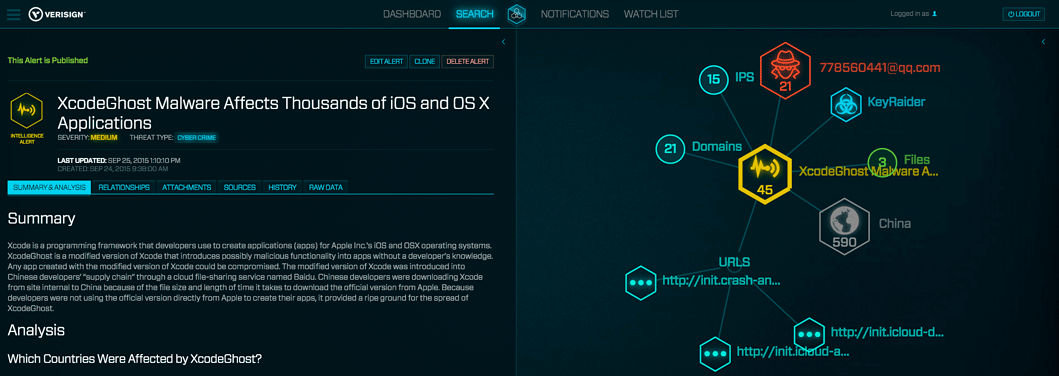
The infection had widespread impact. As of September 25th, Palo Alto Networks and Fox-IT had identified more than 87 infected apps by name, and FireEye claimed to have identified more than 4,000 infected apps. This activity impacts millions of users both in China and elsewhere in the world. To understand key aspects of the infection, iDefense researchers leveraged authoritative DNS traffic patterns to the C2 domains.

Thinking Ahead on Privacy in the Domain Name System
Earlier this year, I wrote about a recent enhancement to privacy in the Domain Name System (DNS) called qname-minimization. Following the principle of minimum disclosure, this enhancement reduces the information content of a DNS query to the minimum necessary to get either an authoritative response from a name server, or a referral to another name server. This is some additional text.
In typical DNS deployments, queries sent to an authoritative name server originate at a recursive name server that acts on behalf of a community of users, for instance, employees at a company or subscribers at an Internet Service Provider (ISP). A recursive name server maintains a cache of previous responses, and only sends queries to an authoritative name server when it doesn’t have a recent response in its cache. As a result, DNS query traffic from a recursive name server to an authoritative name server corresponds to samples of a community’s browsing patterns. Therefore, qname-minimization may be an adequate starting point to address privacy concerns for these exchanges, both in terms of information available to outside parties and to the authoritative name server.

Highlights From vBSDcon: Plenary Talk Videos Now Available
vBSDcon, hosted by Verisign, brought more than 100 attendees from the Berkeley Software Distribution (BSD) community together for a series of plenary talks, educational sessions and networking opportunities earlier this month.
“This biennial conference has been particularly special to us because of the grassroots effort within Verisign to be sure we do our part to help advance BSD,” said Verisign CTO Burt Kaliski.